
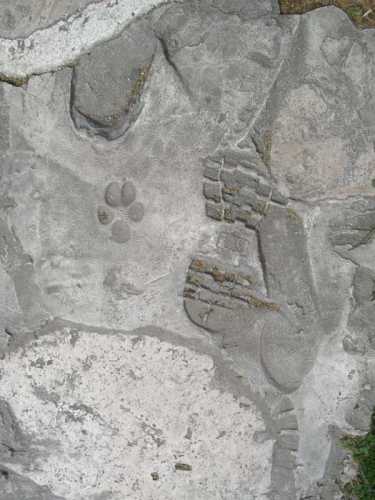
Footsteps in the concrete of a restored pathway
in the court of Sülemaniye camii
The Subject
Mimar (= architect) Sinan (1489 ? - 1588) was the chief Ottoman architect and engineer for the Sultans Süleiman I, Selim II and Murad III. During a period of fifty years, the most powerful phase of the Ottomans, he was responsible for the construction or the supervision of every major building in the Empire. Sinan is considered the greatest Ottoman architect - thus often compared to Michelan-gelo as a Western contemporary or - by his contemporaries - as the Euklid or Aristotle of his time. More than 400 structures are credited to his name: from famous representative buildings as the Süleiman Mosque in Istanbul, to bridges, urban houses, water supply systems, and even fountains. 200 of them still exist in their original state. His status as the predominent architect of his time was unchallenged during the centuries at least on the Ottoman site. And, as Kemal Atatürk took action in the research of Sinans live and work (and named the University of Fine Arts after him ) up to the present day, his works are regarded as the acme of the Ottoman classical style and himself as a paradigm Islamic architect in Turkey. But while his works are quite well documented, less seems to be known about his life. So I tried to find out more about
- his personal biografie and his family
- his status as a Janissary and
- his relationship to Renaissance architecture and architects and vice versa
Sources
To my shame I didn't know Mimar Sinan bevor the Chain course - to be true, nor the names of other Ottoman artists and architects, although I have seen fine examples of their extra-ordinary pieces of work. As Anna Voipio in her Chain article claimes, this ignorance is at least partly credited to our western egocentric historiography As I searched for books in Ger-man about him and his works: "Die Baukunst Konstantinopels" from Cornelius Gurlitt,1972, and "Sinan. Der Baumeister osmanischer Glanzzeit", E. Egli, 1954, were not available. Nor any other biographies translated in German.
When I inquired articles and websites it was confusing to notice that Sinan's descent seems to be a delicat issue: Western biographers like Egli are criticized by Turkish historians, because they link Sinans life story much to his Christian origins(1). Dr. R. Saoud , researcher on Islam studies, states that Sinans father was already a Muslim convert(1). And I found an article proving, that Sinan was an Armenian(2) ...
Much of his origin seems to be quite mysterious because the information about his life and family are sketchy and partly contradictory. Although Sinan was successful and famous, he is not often mentioned in contemporary historical chronicles and later 16th century Ottoman historians didn't pay much attention to memoirs and autobiographies, as the Orientalist J.M. Rogers notes(3). Thus unlike Western historians and writers like Vasari and his successors, who wrote quite a lot about the lives, habits, ideas and working conditions of the "ingenious" Renaissance artists and architects. Rogers(2): "The sources of Sinan's life and career are few and almost entirely on the Ottoman side. Though 16th century illustrations of Istanbul by foreign travellers show some of his buildings, no travellers account mentions or describes them." Whereas Renaissance architects seemed to have been well-known in Istanbul: Michelangelo and Leonardo da Vinci received invitations to build a bridge across the Golden Horn(4).
But back to Sinan. The information about his lifetime and family cited in secondary literature are mainly based on:
- Three brief records, Sinan dictated to his friend Mustafa Sai Celebi, where he divulged some details of his youth and military career.
- Letters from his time as a chief architect of the palace.
- His endowmen, that reveals he had a wife, a son (who died before him), two daughters, a grandson, a nephew, two grand nieces and a brother, who converted to Islam.
- Several more scripts and books from unknown authors.
Biographie
Sinan was born as a Christian in 1489 (maybe later) in Agirnas near the town Kayseri (as stated in a order of Sultan Selim II) in Capadocia/Anatolia of probaly Greek descent and baptised on the name Joseph (Yusuf). His father was a stonemason and might have taught him his crafts. Around 1512, he was concripted into Ottoman service via the Devshirmeh system. He went to Istanbul as a recruit to the Janissary Corps, and was circumcised as he was converted to Islam. Perhaps he was given the Islamic name Sinan here. He was skilled in carpentry and mathematics and also military trained as a cadet over six years before being admitted to the brotherhood of the Janissaries.
Janissaries and Devshirmeh
The Janissaries („new troops“) were the elite corps of the Ottoman Empire, the Ottoman sultan’s household troops and bodyguards. The force originated in the 14th century. Replacing forces that mostly comprised tribal ghazis, whose loyality and morale could not always be trusted, Sultan Murad I of the emergent Ottoman Empire founded the Janissaries as the first Ottoman standing army – and the first and for centuries only standing army in Europe and Minor Asia since the Roman Empire.
The units were initially formed of Dhimni (non-Muslims, originally exempted from the military service), especially Christian youth, war orphants who as captives and slaves were integrated in the troops from child on. After the 1380s Sultan Mehmed I filled their ranks with the results of taxation in human form, called devshirmeh („collecting“ „blood tax“): once in every four or five years the Sultan’s men conscripted a number of only non-Muslim, usually Christian boys from the rural provinces in the Balkans, first at birth at random, later by strict selection – to be converted to Islam and trained, either for the military, the Janissariy corps, or for the other royal institutions. Boys between 12 -18 were preferred, though younger and older ones could be taken too. Greeks and Albanians formed the largest part of the first units. As the Turks expanded their borders, devshirmeh was extended to Bulgarians, Romanians, Serbs, Poles. Ukrainians and southern Russians. Jews and Armenians were exempt from this service (but I didn't find out why). The system had specific limits on who and how many could be taken: usually one boy from 40 houses. Seizing for example single sons of local craftsmen, whose absence would have caused hardship, was not permitted. Under Selim I - in Sinan's youth - devshirmeh was ordered for the Christian minorities in Anatolia, too.
Devshirmeh declined in the late 16th and 17th century due to a number of factors, including the inclusion of free Muslims in the system. In 1648, it was officially abolished. Attempts to reintroduce it failed due to the resistance of the new Turkish members, who wanted the posts exclusively for their own families.
The families of those taken in countries often saw this as forced servitude and loss of ancestral identity. On the one hand fearing that their sons were never to be seen again and that they might be fated to become servants to Turkish high officials, they did their best to hide their sons, which is shown in the folklore culture of the affected nations. On the other hand, although Devshirmeh made the boys into Sultan's state slaves and inevitably led to their conversion to Islam (a price many adult Christians paid voluntarily for social promotion!) it must have been considered as an honor, too, as joining the Janissaries led to a highly privileged position in the Ottoman society.
The impact of this system - recruiting and educating young persons from conquered lands for the military and administration to counterbalance the powers of the old Turkish nobilities, the division of tasks and rights - on the cohesion of the multi-ethnic and multi-cultural empire is a very interesting aspect, too. (A trace not to follow here further here.)
The Jannissaries were trained under strict discipline in practically monastic conditions, where they were expected to remain celibate. They were taught to consider the corps as their home and family and the Sultan as their de facto father. Only those who proved strong enough earned the rank of a "true Janissary" at the age of about 24/25 - as Sinan did. They followed the disciples of a Dervish or Sufi saint (Hajji Bektash Wali) and in this and their secluded life they resembled Christian military orders like the Johannites of Rhodes. In return for their loyality and fervour in war, they gained privileges and benefits: cash salary, booty during wartime, a high living standard and respected social status. They could even rise up the top of the political hierarchy like Rustem Pascha, the Grand Vesir and son-in-law of Süleiman I. Until today the image of the Janissaries is dominated by their military discipline, impressive war-record, by their "outfit" (costumes and mustaches) and the characteristic march music which have remained as one of the symbols of the Ottomans in Europe.
At about 20 years of age Sinan was quite old for the Devshirmeh. Maybe he was taken because he was skilled already as a stonemason and spoke Turkish. And, reconstructing his career, he must have been as ambitious as bright. Obviously, he did not lose contact with his family and took care of them as it is confirmed that he endowed a fountain in Agirnas, and, in 1573, his petition to the Sublime Porte, that his family should not be deported with the rest of the town to repopulate the island of Cyprus - which had been conquered by Selim II the previous year - was granted, on the grounds that he himself was an inhabitant of Agirnas. Also, as mentioned above, he was married. But there seem to be no information, when he founded a family.
Following the phase of scholing and training Sinan participated in many military campaigns from Central Europe (1521 - 1532: Rhodes, Belgrad, Mohàcs, Austria, 1537 Corfu, Apulia, Moldavia) to Iran and Iraq (1535), rising to the position of a Commander of the Royal Guard. In his role as a military engineer and construction officer, he oversaw the building of fortifications, bridges and ships, converted churches into mosques - learning about the weak points of structures, too, when gunning them down.
During this extensive travels for military purposes through a vast geographical region - along the Mediterranean Basin from Anatolia to Italy, the Adriatic coast to Central Europe, from Azerbijan to Baghdad in Asia... , he must have seen fine examples of the architecture of several civilisations and taken note of their qualities. A knowledge that provided him with a wealth of ideas, resources and solutions as are reflected in his later famous constructions.
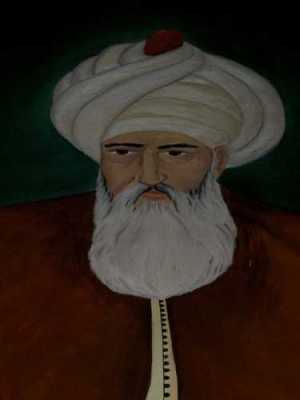 |
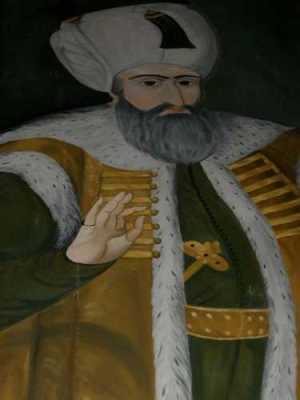 |
| Mirar Sinan | Süleiman I the Magnificent |
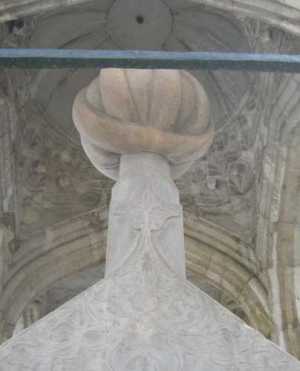
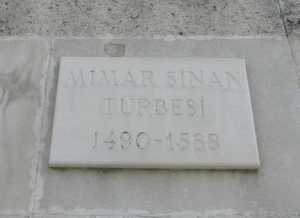
On the basis of his exceptional talents and gift for organisation, Sinan was appointed chief architect of the Sultan in 1539 and from then started one of the most remarkable carreers in the history of architecture: until his death of at least 90 years he was responsible - as already mentioned above - with the assistance of a corps of architects, for the design and construction of over 300 structures. For the Sultans, he realised the buildings, that represented and symbolised the strength and glory of the Empire at the top of its power and extension. For Islam, he set the course - more than any other Ottoman architect - for the design of religious structures for centuries to come. For art and architecture, his importance mainly bases on his creative attempts, his experiments and innovations, that led the Ottoman classical style to its zenit. When he died he was interred in the tomb, he had built for himself next to the Suleymaniye. This is an open canopy covered by a vault set in a garden, which originally contained his house.
 |
 |
Renaissance and Ottoman Classic period
I was interested to discover, if there has been some influence exchange between the Italian Renaissance architects and Sinan, as there has been a considerable amount of contact between Italy and the Ottoman Empire during the life-time of Sinan.
Sinan, during his travels for military purposes, got familiar with Western architecture and may have seen Renaissance buildings, too. And, as documented by Vasari, the stature of Michelangelo and his plans for St. Peters Basilica in Rome were well-known in Istanbul, since he and Leonardo da Vinci received an invitation to build a bridge across the Golden Horn. On the other side there are quite a few islamic architectural features to find in a number of Italian churches - in particular in Florenz and Venice, who had stronger relations with the Muslims in North Africa and the East. Even Sinan might not have been well-known in Italy (due to several reasons, as mentioned above), his monumental buildings must have been recognized.
In 16th century architecture on both sides quite obvious and evident in common are the huge domes. While Italian architects from Brunelleschi to Michelangelo, Alberti and Palladio contributed to the evolution of large domed churches, a equally momentous development took place in the Ottoman Empire, where Sinan experimented boldly with domed structure and interior space in a great number of mosques.
Both architectural traditions, Italian and Ottoman, received influence from the Roman Empire. Although western and eastern architects interpreted the Roman and Byzantine legacy in seperate ways - regarding to structure, space, symbolism and ornament - similar, in my opinion, were their interests in political and religious respects and as an architectural challenge. With the prestigious Süleimaniye mosque, modelled on the Justinian 6th century Hagia Sophia, Süleiman I wanted to surpass his Roman Byzantine pre-decessors. St. Peters Basilica, as a response to the demands of Christianity and the architectural theories of humanist scholars, claimed the mighty of the Christian church and also of the papacy.
Few art historians state the similarities in the work of Alberti and Sinan. Maybe Sinan knew about the ideas of Leon Battista Alberti (who in turn had studied "De architectura" by the Roman architect and engineer Vitruvius), since he too was concerned in building the ideal church, reflecting harmony through the perfection of geometry in architecture. But, contrary to his Western counter-parts, Sinan was more interested in simplification than in enrichement.
However, if the architects knew each other personally and if and how much they knew about the works of their counterparts - I didn't find significant traces...
Literature
- Dr. Rabah Saoud, Foundation for Science Technology and Civilisation, UK 2007: Sinan: A great Ottoman Architect and Urban Designer (muslimheritage.com) (1)
- The Armenian Reporter, February 2001: Will Sinan`s Origin Finally be Publicly Acknowledged?(2)
Most information is based on
- J.M. Rogers, Sinan - Makers of Islamic Civilization, New York/London 2007
Several websites about Sinan, Janissaries and Devshirme
- CHAIN articles
- ArchNet (archnet.org)
- Encyclopaedia Britannica online
- Respect to Sinan (sinanasaygi.com)
- Bauforschungonline.ch (Sinan zwischen Vision und Auftragswerk) - and several more online articles about Sinan and his works.
- Enzyklopädie des Islam
- wikipedia - German and English
